Cork, Card and Community: Inside the Café Wall That Knows Everyone
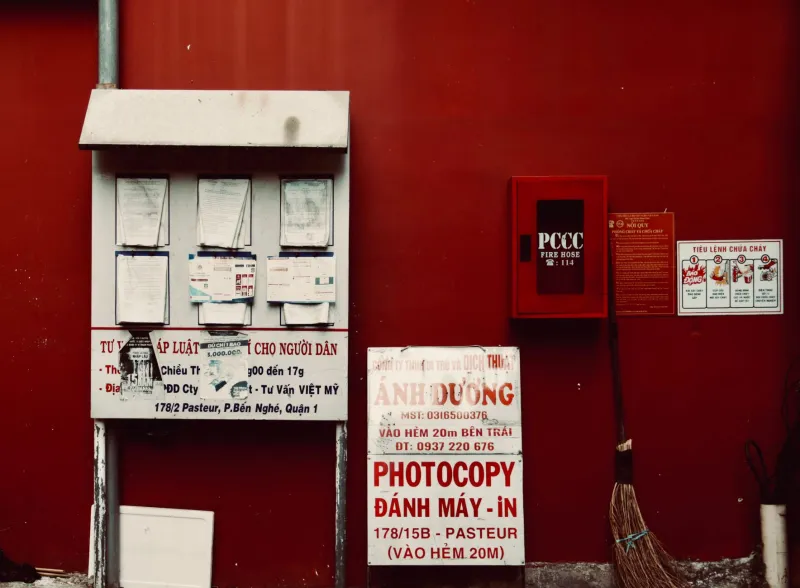
On a wet Tuesday in November, the first thing you notice inside a small café isn’t the espresso machine. It’s the corkboard by the door: three layers deep in cards, curling at the corners, with a faded flyer for a village hall quiz night pinned over a more recent ad for babysitting. Someone has drawn a smiley face on a library poster. Someone else has added a phone number in biro. It is, in its own quiet way, the most honest newspaper in town.
The wall that remembers
Café noticeboards are living archives. They record the things that don’t make the local paper: a missing tabby called Biscuit, a ukulele group looking for a fourth member, a fundraiser for a food bank, a sofa free to a good home. They are messy and provisional and occasionally out of date. That is precisely the point. A noticeboard is not a polished community newsletter; it is the neighbourhood thinking out loud.
In 2026, when so much local life has moved to group chats and algorithm-led feeds, the physical board has become a rarity worth protecting. It asks something of you: to stand still, to read sideways, to tear off a little paper tab with a phone number on it. There is no search bar. You find things by accident.
Lost cats, choir practice and the odd sofa
Look closely at any café board and you can read the character of the place. A suburban café might be heavy on school fair notices, piano lessons and NHS vaccination reminders. A city-centre board leans towards flat shares, life-drawing classes and gigs in basements. A seaside café in February will have a different flavour entirely: beach clean volunteers, a lost dog, a yoga class in the church hall.
The humble lost-cat poster deserves its own exhibition. There is always one, usually laminated, usually with a photo taken from a slightly unflattering angle. Beside it, a choir rehearsal. Below that, a babysitting ad written in neat handwriting. The board is a reminder that a neighbourhood is not just a postcode; it is a web of small requests and offers.
How a noticeboard gets curated
Café owners are the unlikely editors of all this. Ask them how they decide what stays up and you’ll hear variations on a theme: if it’s local, if it’s legible, if it’s not offensive, and if it doesn’t look like it’s been there since the last millennium. Most boards get a quiet cull every few weeks. Out-of-date events come down. Duplicates get removed. A card that has been up for six months and is clearly no longer relevant is gently retired.
There is a limit to the editing, though. Too much curation and the board starts to feel like branded content. The charm is in the slight chaos: the handwritten note next to the professionally printed flyer, the community theatre poster overlapping the council recycling notice. A good café owner knows when to tidy and when to leave well alone.
What the pins say about us in 2026
Noticeboards have always been a mirror, but this year they reflect a few particular preoccupations. There are more cost-of-living notices than there used to be: warm spaces, food bank collections, swap shops, repair cafés. There are more mental health and loneliness groups, often advertised with tear-off tabs and a friendly font. And there are still the perennial classics: dog walkers, guitar lessons, and someone looking for a drummer.
What hasn’t changed is the trust involved. A café board is a low-stakes civic space. You don’t need an account to post a card. You don’t need to agree to terms and conditions. You just need a pin and a bit of nerve. In a digital landscape that feels increasingly noisy and commercial, that feels almost radical.
A small act of belonging
So next time you’re waiting for a flat white, spend a minute at the back wall. Read the lost-cat card. Consider the choir. Take a tab with a phone number on it, even if you never call. The café noticeboard is not a grand monument to community; it is something better — a work in progress, updated by hand, held together with cork and card and the reasonable hope that someone nearby might be interested.
And if you happen to have a spare sofa, a ukulele, or a cat called Biscuit, you know where to pin the notice.