Paperback Corners and Window Seats: Six Cafés Built for Readers
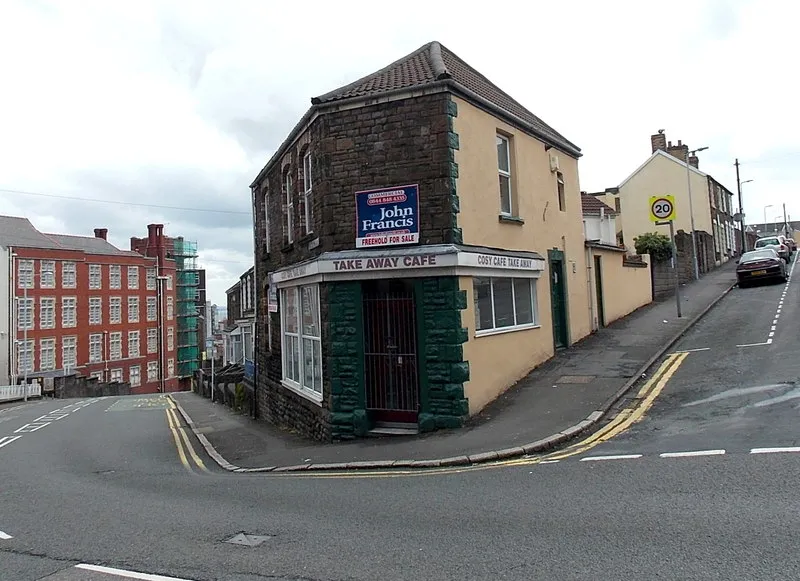
Photo: Jaggery , CC BY-SA 2.0, via Wikimedia Commons
There is a particular sort of winter afternoon that only a café can supply. The windows have fogged at the corners, someone behind the counter is steaming milk with more vigour than the job strictly requires, and you have a book you've been carrying about for three weeks without ever opening past page nine. All you need now is a table — and the quiet certainty that nobody is going to start stacking chairs at you.
That certainty is rarer than it ought to be. Plenty of cafés will happily sell you a flat white and then hover, gently but unmistakably, until you take the hint. But the ones that don't — the ones that let a reader be — are worth seeking out and then going back to, again and again, until you're the person who gets a nod rather than a menu.
The one-latte agreement
Let's get the awkward bit out of the way, because it is the thing that keeps readers apologising for themselves.
The unwritten bargain is simple: you are renting a chair, not buying the room. Order something when you arrive, and order something again if you've been there a while — roughly every hour is the going rate in most independent places, and a second coffee or a slice of something is a small price for an entire afternoon of armchair. Choose a table that suits the size of your party, which for a reader is usually one small one near a wall rather than the six-seater by the window. And if the place fills up, offer to move or order a takeaway cup. Nobody has ever been asked to leave for being considerate.
The rest is timing. Between noon and two, a café with twelve tables and forty customers is not a library, and treating it as one is how readers get a reputation. Arrive at half two, or mid-morning, or in that lovely hollow stretch after the school run, and you'll find the pace drops and the welcome lengthens.
How to spot a reading-friendly room
You can usually tell within ten seconds of walking in. Look for a shelf of second-hand paperbacks with a handwritten sign. Look for mismatched chairs, a lamp in the corner, and tables that don't all face the door. Look for at least one other person sitting alone with a book, a crossword or a folded newspaper, entirely unbothered.
Then listen. A café can have music; it shouldn't have a playlist calibrated to hurry you along. It can be busy; it shouldn't have a queue that makes your spine prickle with guilt. And watch the staff — are they clearing a finished plate and leaving the cup that still has half an inch in it? That's a very good sign. Somebody there understands the difference between a table that needs turning and a person who is simply reading.
Sockets at skirting level, an absence of five-minute Wi-Fi limits, and a toilet you're allowed to use without asking all count in a café's favour too.
Six sorts of place worth packing a book for
The bookshop coffee bar. The natural habitat of the reading café, and the only place where nobody raises an eyebrow at you bringing a book you haven't bought. Order at the counter, take a seat at the back, and enjoy the peculiar pleasure of reading in a room that smells of new paper and old coffee at the same time.
The village café with a swap shelf. Usually found in a converted chapel, a former post office or the front room of somebody's house in the Yorkshire Dales, rural Norfolk or mid-Wales. The shelf works on trust: leave one, take one, don't walk off with the one somebody has inscribed to a dead relative. The tea comes in a proper pot and the scones are the size of a saucer.
The museum or cathedral café. Not the ones in the grand entrance halls, which are all clatter and coach parties, but the smaller rooms tucked round the back. They're almost empty on a wet Tuesday in January, the tables are generously spaced, and the coffee has improved immeasurably in the past decade.
The market-town back room. A café that started as a deli, expanded into the shop next door, and now has a dimly lit rear space with three tables where a reader can be forgotten about entirely. Ask for the back; they will be delighted someone wants it.
The all-weather community café. Allotment huts, church halls, sports pavilions and community fridges with a kettle and a coffee machine. Opening hours are erratic, the cake is unpredictable and the welcome is total. Take a paperback, leave a paperback.
The out-of-season seaside café. In July it's a different animal. In November, with the promenade empty and the tables half-covered, a café in Whitstable, Northumberland or the Fife coast is the quietest reading room in Britain — and you can look up at the grey sea every so often, which is its own kind of chapter break.
Mind the shelf
One last thing about the borrowed bookshelf, since it's the heart of the whole arrangement. Take a book only if you mean to finish it or pass it on. Leave one you'd genuinely recommend rather than one you're divesting yourself of. Write your name inside if you like; the next reader usually enjoys it. And if a café has gone to the trouble of building a shelf, the least a reader can do is keep it alive.
Find one of these places, order a coffee you actually want rather than the cheapest thing on the board, and let yourself read for an hour. It is a small, unglamorous pleasure, and it is one of the best things a café does.