Crumbs of Kindness: Why the Saucer Biscuit Still Matters
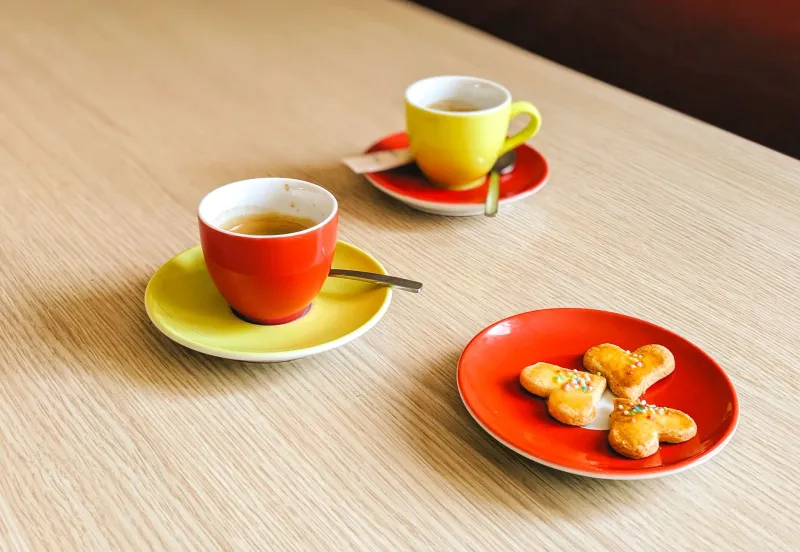
The coffee lands first. Then the saucer. And there, beside the cup, is the small biscuit: a thin round of shortbread, a ginger snap, a wrapped square with a logo on it. It was not ordered. It is not on the bill. It is, in the quiet grammar of a café, a welcome.
We talk a lot about coffee culture in terms of beans, brew ratios and the correct shade of crema. But the saucer biscuit is a different kind of signal. It is not about precision. It is about attention. A café can have a beautiful espresso machine and still feel like a transaction. A café that takes the trouble to put something small and free beside your cup is telling you something else: we are glad you are here, and we did not want the coffee to arrive alone.
The First Rule: It Is Not a Freebie
The saucer biscuit is not a sample, a promotion or a loss leader. Or at least, it should not feel like one. The moment it becomes branded collateral, it changes character. A wrapped biscuit with a website printed on it says logistics. A homemade biscuit says someone thought about the morning.
This is why the gesture works best when it is almost invisible. No sign announces it. No one asks if you have tried the biscuit. It simply appears, like a full stop at the end of a sentence. You can eat it, ignore it or leave it. The café does not make a performance of it. That restraint is part of the hospitality.
To Dunk or Not to Dunk
There is no real etiquette, which is the joy of it. Some people eat the biscuit before the coffee arrives, which feels a little hasty but is nobody’s business. Some wait until the first sip, then the second, then use the biscuit as a small punctuation mark. Some dunk. Some do not. A good café does not police any of it.
The only gentle rule is this: do not ask for another. The biscuit is a gift, not a side order. If it is homemade and particularly good, you may say so. That is enough. Leaving it on the saucer is also allowed. Not everyone wants something sweet, and a biscuit that goes uneaten is not a rejection. It is just a small thing that was offered.
Wrapper Versus Shortbread
There is a world of difference between a generic wrapped biscuit and a proper homemade one. The wrapped sort is safe, sealed and shelf-stable. It says the café has a supplier and a system. That is not a crime. But it rarely says much else.
A homemade shortbread, by contrast, is slightly uneven. It may be a little thicker at one edge. It might carry the faint grit of demerara, the warmth of ginger, the nutty quiet of oats. It does not need to be fancy. In fact, the best saucer biscuits are usually plain: butter, sugar, flour, a pinch of salt. They are there to flatter the coffee, not compete with it.
A café that bakes its own saucer biscuits is making a small statement about time. Someone had to mix, roll, cut and bake them. Someone had to remember. That is a different kind of cost from a box of wrapped biscuits, and it shows in the crumb.
Six Cafés That Still Bother
The Quarterhouse, Bristol — A thin oat biscuit with a whisper of sea salt arrives with every flat white. It is the kind of thing you notice only after it has gone, which is probably the point.
Milk & Honey, Cardiff — Their saucer treat is a thumb-sized butter biscuit, baked in-house and never quite identical. On a wet Welsh morning, it feels like a small act of defiance.
The Old Scullery, York — A ginger snap with a proper bite, served beside a filter coffee. It is simple, warm and exactly right for the stone streets outside.
Bramble & Bean, Edinburgh — A shortbread with a faint hint of fennel seed, just enough to make you pause. It is not shouty. It is a biscuit that knows its place.
Cwtch Corner, Swansea — The name promises comfort, and the saucer delivers: a plain butter biscuit, slightly sandy, made for dunking. No ceremony, no charge.
The Paper Cup, Belfast — An oat and raisin biscuit that tastes like something from a home kitchen. It is the sort of small kindness that makes a city feel friendlier than its weather suggests.
The Smallest Test
A loyalty card counts your visits. A saucer biscuit remembers that you are a person. That is the difference. One is a system; the other is a habit of care.
So next time your coffee arrives, look at the saucer before the cup. If there is a biscuit there, take it as a good sign. If there is not, no scandal. But when it is there, and when it is made with a little thought, it is one of the quietest and best things a café can offer. Here at Cafe Dolce, we will always notice.