The Room Before the Coffee: Reading a Café by Its Sound
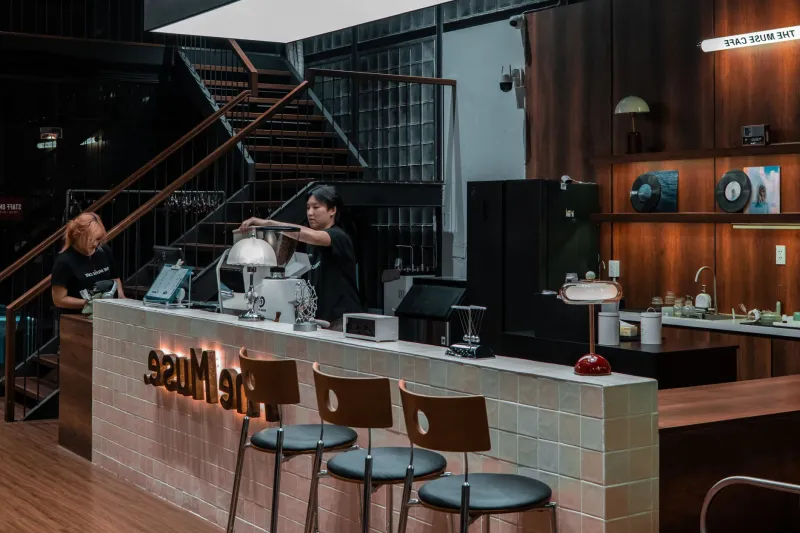
You notice it before you’ve taken off your coat. Sometimes it’s a warm murmur under the milk steamer; sometimes it’s a bassline that seems to be aimed directly at your shoulders. Either way, a café’s soundtrack arrives before the coffee does, and it has already made a few decisions about how long you’re welcome to stay.
That might sound dramatic for a Tuesday morning flat white, but music is part of hospitality. It is not wallpaper. It is the room’s body language. A thoughtful café uses it to soften the edges, give people permission to linger, and make the space feel like somewhere rather than anywhere. A careless one uses it to fill a silence and, accidentally or otherwise, hurry you along.
The volume test
The first cue is not taste. It is volume. A café can play the most impeccable soul record in the world and still make it feel like a fire alarm if the speakers are set too high. Good volume leaves room for conversation without asking anyone to lean across the table like a spy. It lets the clatter of cups be part of the atmosphere rather than something you have to shout over.
When the music is too loud, the message is usually clear: this is a place for turning tables, not for settling in. That is fine if you run a busy lunch counter. It is less fine if you have put out mismatched armchairs and a shelf of dog-eared paperbacks. The room and the playlist need to agree with each other.
What the playlist is trying to do
A playlist has a job. Sometimes it is there to wake the room up — bright, rhythmic, a little bit of bounce for the morning rush. Sometimes it is there to slow the pulse after lunch, which is where low-key jazz, older soul, or a gentle folk record earns its keep. The best café music does not demand attention. It gives the room a temperature.
You can often tell whether someone has actually chosen the music or simply left a streaming service to its own devices. The giveaway is not coolness. It is care. A well-made playlist shifts with the day. It has quiet corners. It does not jump from a whisper to a stadium chorus while someone is trying to read the first page of a novel.
Three listening cues to spot a café that cares
First, listen for the gaps. If there are no pauses at all — no moments where the music steps back — the café may be treating sound as a constant product rather than an atmosphere. A little breathing room is a good sign.
Second, notice whether the staff seem to hear it. If someone quietly turns the volume down when the room fills up, that is hospitality in action. If the barista is singing along without apology, that is not a red flag; it is often a very good one. It suggests the music belongs to the people in the room, not just the speakers.
Third, check how it makes you feel about the door. A good soundtrack does not make you feel trapped, and it does not make you feel like you are overstaying. It makes the idea of one more coffee feel entirely reasonable.
Where the soundtrack quietly gets it right
The spots that pass the test are rarely the ones making a performance of their taste. They are the small local places where the music is part of the furniture: a bookshop café in a Yorkshire market town with a radio hum and a stack of second-hand paperbacks; a neighbourhood café in Bristol where the afternoon slides from soul to something softer without anyone announcing it; a station-side stop in Leeds where the playlist is just low enough to let the announcements do their thing.
In London, it is often the tucked-away places — the ones with six tables and a record player behind the counter — that understand the assignment. In Glasgow or Cardiff, you might find it in a community café where the music is chosen by whoever is on shift and the result is pleasantly unpredictable. These places are not trying to soundtrack your life. They are trying to make the room feel held.
The radio hum and the art of not trying too hard
There is also a particular pleasure in a café that simply has the radio on, quietly, like a kitchen. A little BBC 6 Music in the morning, perhaps, or the low burble of a local station. It is not curated. It is not a mood board. It is just company. On the right day, that is exactly what you want.
The playlist test is not about snobbery. It is about attention. A café that has thought about what it sounds like has probably thought about what it feels like too. And that is the sort of place worth taking your time in — long after the first sip, and long after the last.