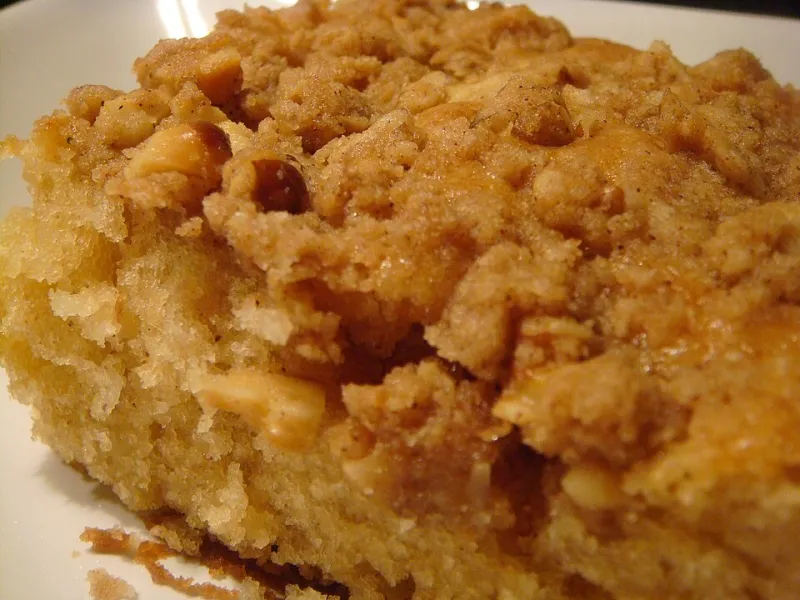
Cut, Wrapped, Carried: Why Café Cake Now Leaves in a Box
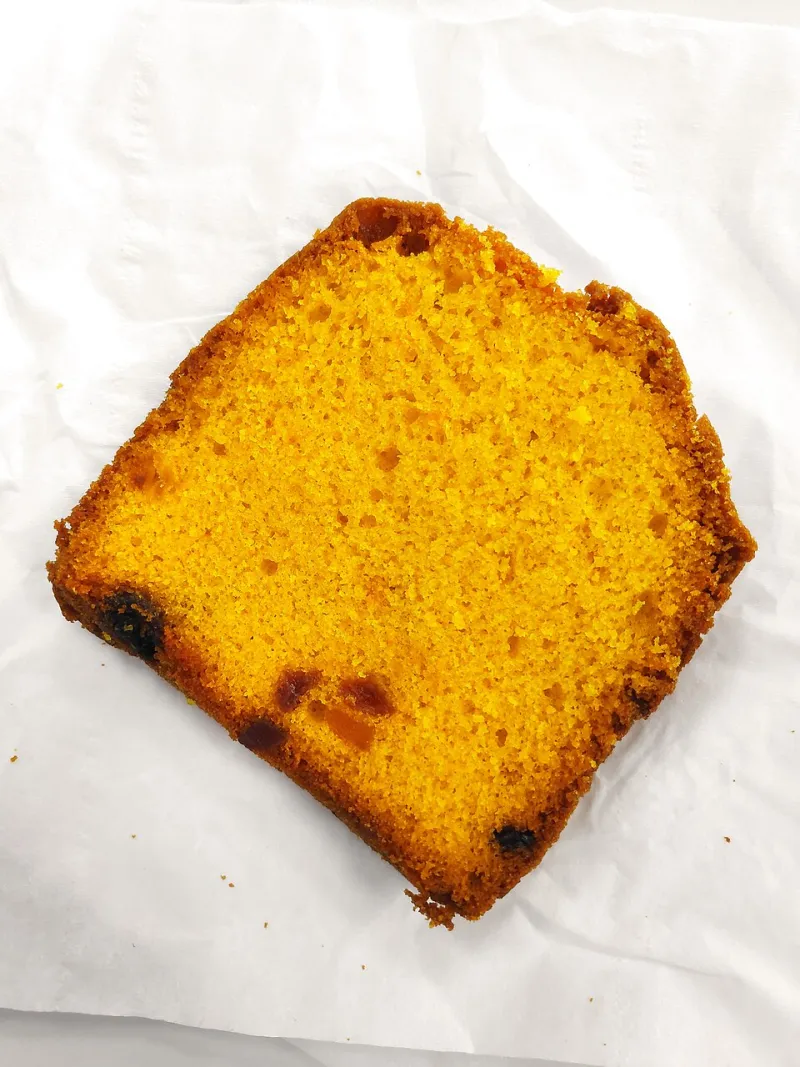
Photo: Gaurav Dhwaj Khadka, CC BY-SA 4.0, via Wikimedia Commons
Somewhere between the second coffee and the walk back to the desk, a decision gets made. The cake on the counter — the one under the glass dome, with a proper crumb and a thick line of icing — is not going to be eaten here. It is going to be cut, wrapped, boxed and carried, and it is going to be eaten at four o'clock, in a kitchen or an office or on a train, at exactly the moment the afternoon needs rescuing.
Buying cake to take away used to be an afterthought, the thing that happened when you could not finish a slice. Increasingly it is the reason for the visit, and the counter has quietly reorganised itself around the box.
From doggy bag to small act of design
The old takeaway cake was a slice in a paper bag, resting at an angle, icing welded to the paper. Somehow it always arrived home looking like a fossil.
The new version is a different object altogether. Flat cardboard boxes with a little window. Cake boards cut to size. A strip of greaseproof between layers, a sticker on the lid, a name in marker pen. Bakeries have worked out that a cake which survives a journey is worth more to everybody — the customer gets a proper slice, and the café gets a return visit.
It helps that the range has grown. Where a counter once offered one sponge and a flapjack, it now offers a rotation of six, plus a tray of something seasonal that will be gone by Friday.
The cafés getting it right
You do not need a famous name on the awning to do this well. The pattern turns up all over the country.
There is the bakery in Leeds with a glass-fronted cake fridge by the door, staffed by someone who will tell you honestly which slices travel and which should be eaten on the premises — the custard tart is a stayer, the lemon drizzle is a goer.
There is the small café in Bristol that keeps a stack of flat boxes behind the till and will box any slice on the counter without being asked twice, folding and taping the corners so nothing slides.
There is the tearoom on the edge of the Cotswolds that has wrapped fruit cake in waxed paper for decades, long before the boxes arrived, and has never once got it wrong.
And there is the neighbourhood place in Cardiff that opens a weekend box — six slices, chosen by the kitchen that morning, collected by pre-order. It is the sort of quiet institution that ends up organising a Saturday.
What they share is not equipment or branding. It is an understanding that the cake leaves with you, and that the journey is part of the bake.
Packaging is half the bake
A good box does three things: it holds the slice still, it keeps the icing off the lid, and it lets the cake breathe just enough.
The failures are always the same. Sealing a warm cake into a plastic clamshell so it steams and turns sticky on the way home. Stacking two slices so the top one presses a line into the bottom one. Using a bag for something with a cream filling and a twenty-minute bus ride ahead of it.
As a rough rule: butter-heavy cakes and loaves are the most forgiving travellers. Anything with fresh cream, custard or a fragile pastry shell is best eaten within sight of the counter. Icing survives, meringue does not, and a slice with a soft fruit layer will always leak a little, which is not a fault, just physics.
If you are buying more than one slice, ask for a box rather than a bag, and ask for a cake board if the slice is generous. Any café that boxes cake regularly will have both within reach.
The commute test
Carrying cake is a skill, and it is mostly about resisting the urge to sling the bag over your shoulder.
Keep the box flat. Put it on the passenger seat, not the back seat, and definitely not on the parcel shelf. On a train, the table in front of you is your friend and the floor is not, however steady the floor looks. On a bus, hold it like a tray of drinks and accept that you will look faintly ridiculous, because you will also arrive with an intact slice.
The one thing to avoid is the shopping bag with the milk in it. Cake and a two-litre bottle do not belong in the same bag, no matter how carefully you arrange them.
The opening of the box
Then comes the good part. Three or four o'clock, the kettle on, the box on the table, the lid lifted to reveal whatever you chose at eleven in the morning when you were a slightly more optimistic person.
There is a particular pleasure in a cake eaten away from the café it came from. It is not the same as sitting in the window with a fork, and it is not meant to be. It is a small, deliberate treat in the middle of an ordinary day, costing about the same as a mediocre sandwich.
At work, the box brings its own social rules. Someone will ask what it is. Someone will claim not to be hungry and then have half. Someone will cut the slices unfairly, and everybody will notice, and nobody will say anything.
A short checklist before you pay
Ask which slices travel best. Ask for a box if you are buying more than one. Ask for the cake board. Never seal anything warm. And if the whole counter looks too good to choose from, consider a small whole cake instead — most cafés will box one up gladly, and it slices neatly at home for the rest of the week.
The box is not a lesser version of the café visit. It is the visit, extended. Cake was always portable; it simply took us a while to give it the packaging it deserved.